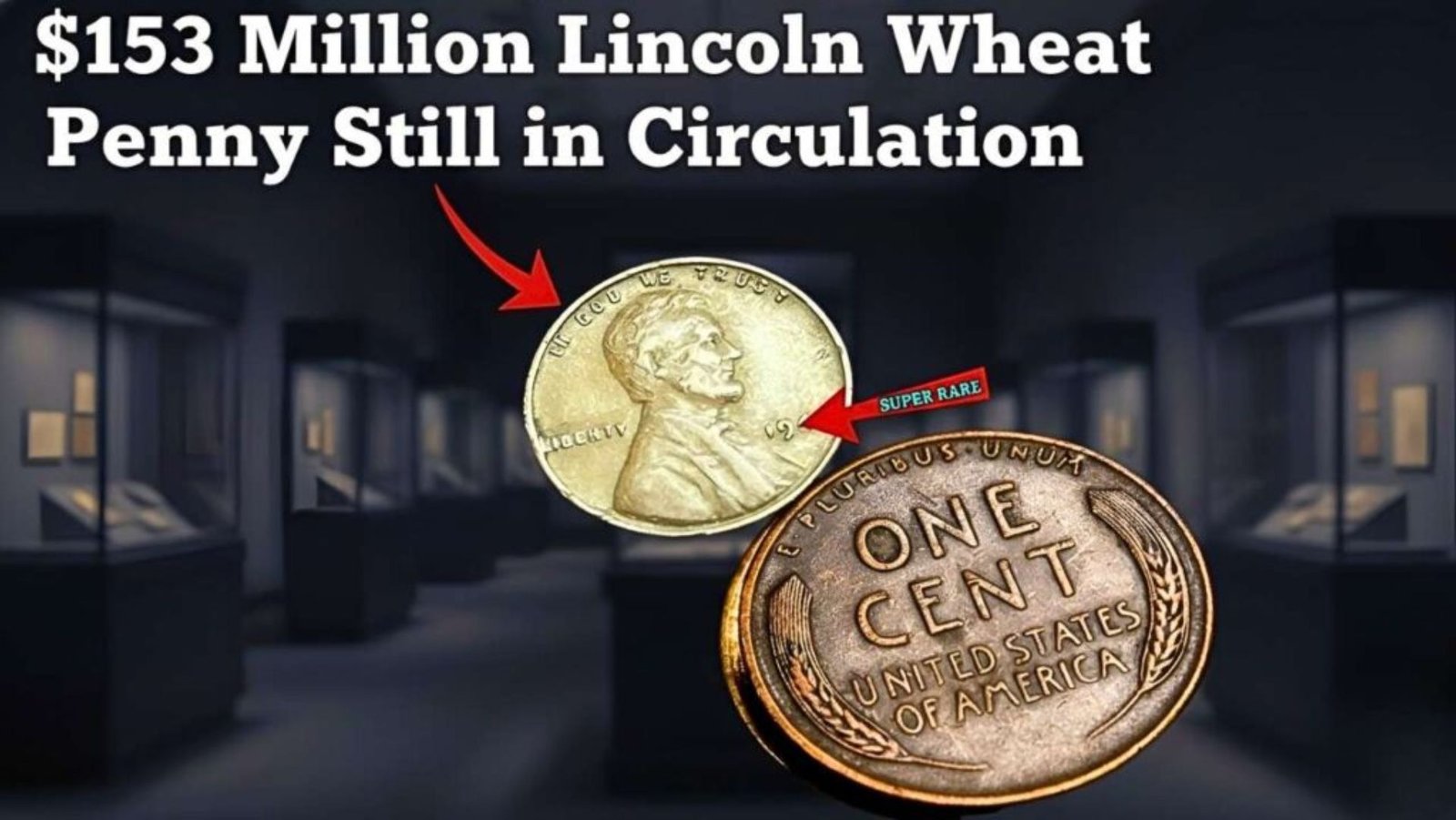
The Lincoln Wheat Penny (officially called the Lincoln Cent—was the first U.S. coin to feature a real person (Abraham Lincoln) on the front. Designed by Victor David Brenner, it shows Lincoln on the obverse and two wheat stalks on the reverse—hence the nickname “Wheat Penny” or “Wheatie.” Minted from 1909 to 1958, billions were made… but a handful of mistakes turned some into million-dollar treasures.
A Quick History of the Wheat Cent
1909 marked the 100th anniversary of Lincoln’s birth, so the U.S. Mint replaced the Indian Head cent with the new Lincoln design. The original 1909-VDB coins even had the designer’s initials on the back—causing a scandal that made them instantly famous. Production continued through two world wars until 1959, when the Memorial reverse replaced the wheat ears.
Why Some Wheat Pennies Are Worth Millions Today
Most wheat pennies are worth 3–25 cents, but tiny minting mistakes (called errors) and super-low mintages created monsters. The current record belongs to the 1943 bronze pennies (almost all 1943 cents were struck in steel because of WWII copper shortages). A handful were accidentally made in bronze—and those have sold for up to $1.7 million each. When you add up all ultra-rare dates and errors, the “$153 million” headline comes from the combined auction totals of the rarest examples over the years.
The Top 10 Most Valuable Lincoln Wheat Pennies (2025 Values)
| Rank | Year & Mint | Key Feature | Recent Sale / Est. Value |
|---|---|---|---|
| 1 | 1943 Bronze (all mints) | Wrong metal planchet | Up to $1.7 million |
| 2 | 1944 Steel | Wrong metal (off-metal) | $300,000–$500,000 |
| 3 | 1955 Doubled Die Obverse | Dramatic doubling on date/Liberty | $100,000–$150,000 (MS) |
| 4 | 1909-S VDB | Lowest mintage regular issue | $80,000–$120,000 (MS65+) |
| 5 | 1922 No D | Missing mint mark error | $30,000–$100,000 |
| 6 | 1931-S | Only 866,000 minted | $15,000–$50,000 |
| 7 | 1914-D | Low mintage Denver | $10,000–$40,000 |
| 8 | 1909-S | First San Francisco wheat | $8,000–$30,000 |
| 9 | 1926-S | Very low mintage | $6,000–$25,000 |
| 10 | 1936 Doubled Die Obverse | Strong doubling | $5,000–$20,000 |
How to Check If YOUR Wheat Penny Is Rare
- Look for dates 1909–1958.
- Flip it over—if it has wheat ears, it’s a Wheat Penny.
- Check the date and mint mark (tiny letter under the date: D = Denver, S = San Francisco, no letter = Philadelphia).
- Look closely for doubled lettering, missing mint marks, or off-color metal (bronze in 1943 or steel in 1944).
- Use a 10x magnifying loupe—many errors are tiny!
Expert Tips for Hunting Valuable Wheat Cents
- Search bank rolls and old jars—people still find 1943 bronze cents in circulation!
- Never clean your coins; cleaning destroys value.
- Get suspicious coins authenticated by PCGS or NGC before celebrating.
- Join local coin clubs or Facebook groups—members often share new finds.
Frequently Asked Questions
Q: Are all wheat pennies valuable?
A: No, 99.9% are worth only a few cents. Only specific rare dates and errors bring big money.
Q: Can I still find a million-dollar penny in change?
A: Extremely unlikely, but 1955 doubled dies and 1909-S VDBs still show up in rolls every year.
Q: Where should I sell a rare wheat penny?
A: Reputable auction houses like Heritage Auctions, GreatCollections, or Stack’s Bowers.
Final Thought – Your Fortune Could Be Sitting in a Coffee Can
That dusty jar of old pennies in your attic might just hold a six- or seven-figure surprise. Grab a magnifying glass, start sorting by date, and who knows—you could be the next person to discover a $100,000+ Lincoln Wheat Penny hiding in plain sight. Happy hunting, and let me know in the comments if you find anything good!