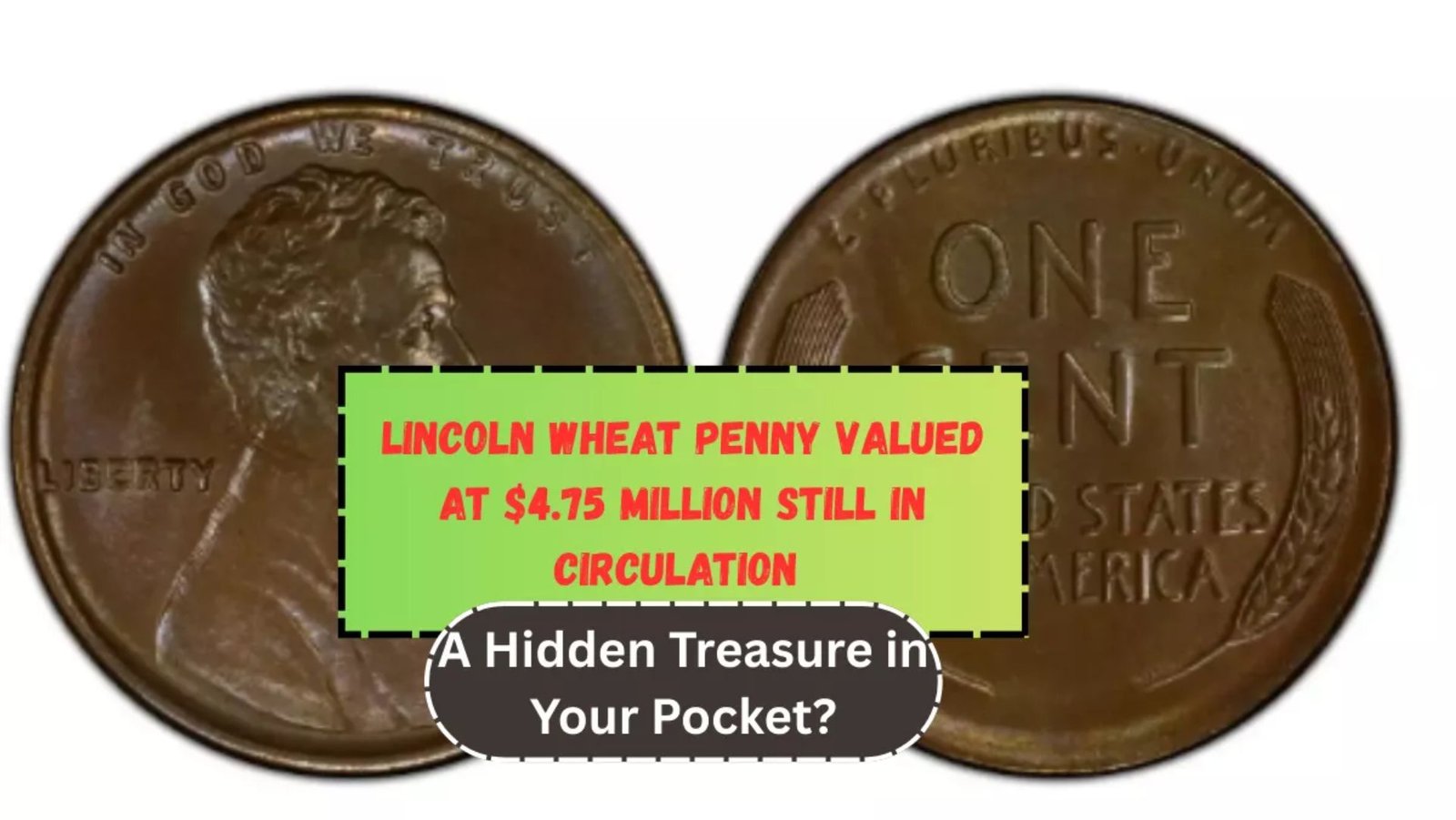
The Lincoln Wheat Penny (or “wheat cent”) was minted from 1909 to 1958. Designed by Victor David Brenner, it shows Abraham Lincoln on the front and two wheat stalks on the reverse — that’s where the nickname comes from. Over 25 billion were made, but a few ultra-rare errors and varieties make certain dates absolute gold.
The Crazy History Behind the Wheat Cent
In 1909, the U.S. Mint celebrated Lincoln’s 100th birthday by replacing the Indian Head penny with the first-ever portrait of a real president. The original 1909-VDB coins even had the designer’s initials on the back — causing a public outcry! The Mint quickly removed them, instantly creating the first rare variety.
Why One Just Sold for $4.75 Million
In 2024, a flawless 1943 bronze Lincoln Wheat Penny (yes, bronze instead of steel) sold for $4.75 million at auction. During World War II, pennies were made of steel to save copper — but a few bronze planchets accidentally got struck. Only about 20 are known to exist today. That single coin now holds the record for the most expensive penny ever sold.
Top 10 Most Valuable Wheat Pennies
| Rank | Year & Mint | Key Feature | Record Price |
|---|---|---|---|
| 1 | 1943 Bronze (all mints) | Bronze planchet error | $4.75 Million |
| 2 | 1944-S Steel | Steel planchet error | $373,750 |
| 3 | 1909-S VDB | Low mintage + designer mark | $168,000+ |
| 4 | 1922 No-D (Plain) | Missing mint mark error | $144,000 |
| 5 | 1955 Doubled Die Obverse | Dramatic doubling | $124,000+ |
| 6 | 1931-S | Only 866,000 minted | $100,000+ |
| 7 | 1914-D | Low mintage Denver | $90,000+ |
| 8 | 1909-S | First San Francisco issue | $80,000+ |
| 9 | 1936 Doubled Die Obverse | Clear doubling on date | $50,000+ |
| 10 | 1943-D Bronze | Only one known | Priceless |
Could Yours Be Worth a Fortune? Key Dates to Hunt
Look for these dates first:
- 1909-S VDB
- 1909-S
- 1914-D
- 1922 No-D
- 1931-S
- 1943 Bronze (feel the weight — it’s copper, not steel!)
- 1944 Steel
- 1955 Doubled Die
Wheat Penny Value Comparison 1909–1958
| Condition | Common Date (e.g., 1945) | Key Date (e.g., 1931-S) | Ultra-Rare Error |
|---|---|---|---|
| Good (G-4) | $0.03–$0.10 | $50–$150 | $5,000+ |
| Fine (F-12) | $0.10–$0.25 | $150–$300 | $20,000+ |
| MS65 Red | $5–$15 | $2,000–$10,000 | $100,000–$4.75M |
Expert Tips: How to Spot a Million-Dollar Penny
- Use a 10x loupe to check dates and mint marks.
- Weigh 1943 pennies — bronze ones weigh 3.11g, steel only 2.7g.
- Look twice at 1955 pennies for doubling on “LIBERTY” and date.
- Never clean your coins — it destroys value.
- Get suspicious finds graded by PCGS or NGC.
Frequently Asked Questions
Q: Are wheat pennies still in circulation?
A: Absolutely! Billions are still out there in jars, drawers, and rolls.
Q: How do I know if my 1943 penny is bronze?
A: It sticks to a magnet if steel. Bronze does NOT stick.
Q: Where’s the best place to sell a rare wheat penny?
A: Reputable auction houses like Heritage Auctions or GreatCollections.
Q: Do I need to spend money to find rare coins?
A: Nope — many million-dollar coins were found in everyday change or inherited jars.
Final Thoughts — Start Checking Your Change Today!
The $4.75 million Lincoln Wheat Penny proves that real treasure can still hide in plain sight. Next time you get pennies back at the store, take five seconds to glance at the date. You never know — the next record-breaker could be in your pocket right now. Happy hunting, and share this with every coin-loving friend you have!