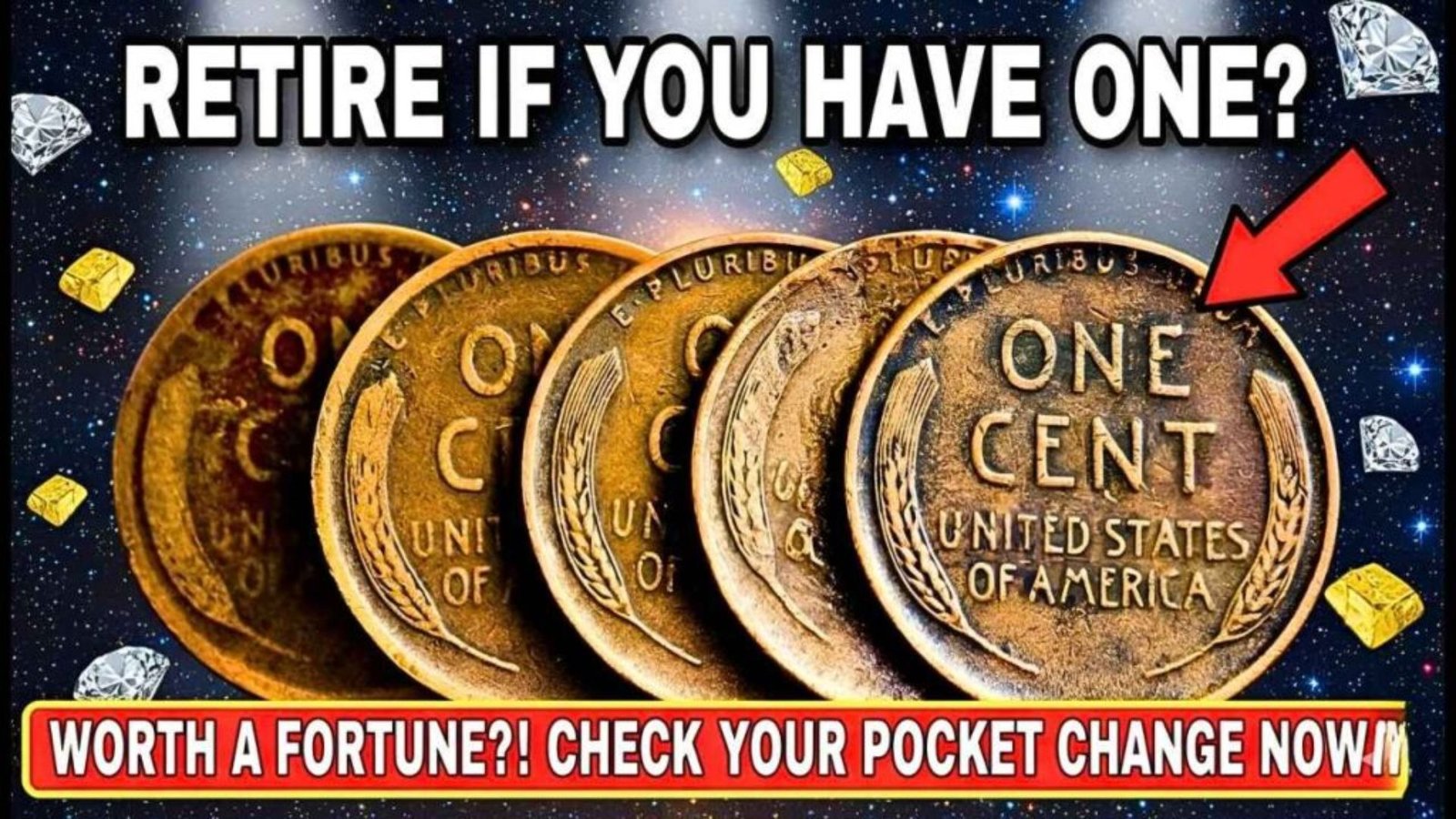
Wheat pennies (officially Lincoln Wheat Cents) are the classic U.S. one-cent coins minted from 1909 to 1958. Designed by Victor David Brenner, they show Abraham Lincoln on the front and two wheat stalks on the reverse—hence the nickname every collector knows and loves.
A Quick History of the Iconic “Wheat Cent”
Introduced in 1909 to celebrate Lincoln’s 100th birthday, the Wheat penny was the first U.S. coin to feature a real person. Over 50 years, billions were made, but tiny minting mistakes and super-low production years created some of the rarest coins on the planet.
Why Some Wheat Pennies Are Worth a Fortune Today
Condition, rarity, and errors drive the price. A normal 1955 penny? One cent. A 1955 Double Die? Up to $125,000! Collectors go crazy for key dates (like 1909-S VDB) and dramatic errors that slipped past quality control.
Top 10 Most Expensive Wheat Pennies Ever Sold
- 1943 Bronze (Alloy Error) – $2,000,000+
The holy grail—only about 20 exist. All 1943 cents were supposed to be steel… but a few bronze planchets got struck by mistake. - 1909-S VDB – $1,700,000+ (Finest Known)
The famous “designer’s initials” coin with the lowest mintage of the series. - 1944 Steel (Error) – $373,000
Opposite of 1943—steel planchets left over from wartime got used in 1944. - 1955 Double Die Obverse – $125,000–$200,000
Dramatic doubling on date and lettering—easy to spot with the naked eye. - 1931-S – $100,000+ in MS66+
Only 866,000 minted—second-lowest in the series. - 1914-D – $90,000–$150,000 (Gem)
Another low-mintage Denver issue that collectors fight over. - 1922 No D (Plain) – $60,000–$140,000
The “D” mintmark wore off the die—creating the famous “No D” error. - 1909-S – $80,000+ (MS67+)
Any super-high-grade early S-mint is insane money. - 1943-S Bronze – $504,000 (record)
The San Francisco bronze error is rarer than its Philly cousin. - 1917 Double Die Obverse – $50,000–$120,000
Strong doubling makes this WWI-era coin a sleeper hit.
Recent Auction Price Comparison Table
| Rank | Year & Variety | Highest Sale | Year Sold | Grade |
|---|---|---|---|---|
| 1 | 1943 Bronze | $2,000,000+ | 2024 | MS-62 |
| 2 | 1909-S VDB | $1,700,000 | 2023 | MS-68 |
| 3 | 1943-S Bronze | $504,000 | 2021 | AU-50 |
| 4 | 1944 Steel | $373,000 | 2022 | MS-64 |
| 5 | 1955 Doubled Die | $199,750 | 2025 | MS-65 RD |
How to Spot a Valuable Wheat Penny in Your Change
- Look for 1909–1930 dates first (especially S mintmarks)
- Flip it—check for doubling, missing mintmarks, or wrong metal
- Use a 10x loupe or your phone’s zoom
- Steel 1943s are common; bronze ones are the million-dollar mistake
Expert Tips for Starting Your Own Hunt
- Buy Whitman folders for $5 and fill holes with circulated examples
- Cherrypick rolls from banks—people still find 1955 DDOs!
- Get anything that looks “off” authenticated by PCGS or NGC fast
- Join local coin clubs—old-timers love trading stories stuff
Frequently Asked Questions
Q: Are Wheat pennies still in circulation?
A: Yes! Especially 1940–1958 steel and copper ones turn up all the time.
Q: What’s the most common valuable error?
A: The 1955 Double Die—still worth $1,000 even in Fine condition.
Q: Should I clean my old pennies?
A: Never! Cleaning destroys value instantly.
Final Thoughts – Your Million-Dollar Penny Could Be Waiting
One tiny copper disc, forgotten in a jar or attic box, has literally made everyday people millionaires overnight. The top 10 most expensive Wheat pennies prove that coin collecting isn’t just a hobby—it can be the smartest treasure hunt you’ll ever join. So grab that old coffee can of change, start looking, and who knows… the next record-breaking penny might have your name on it!